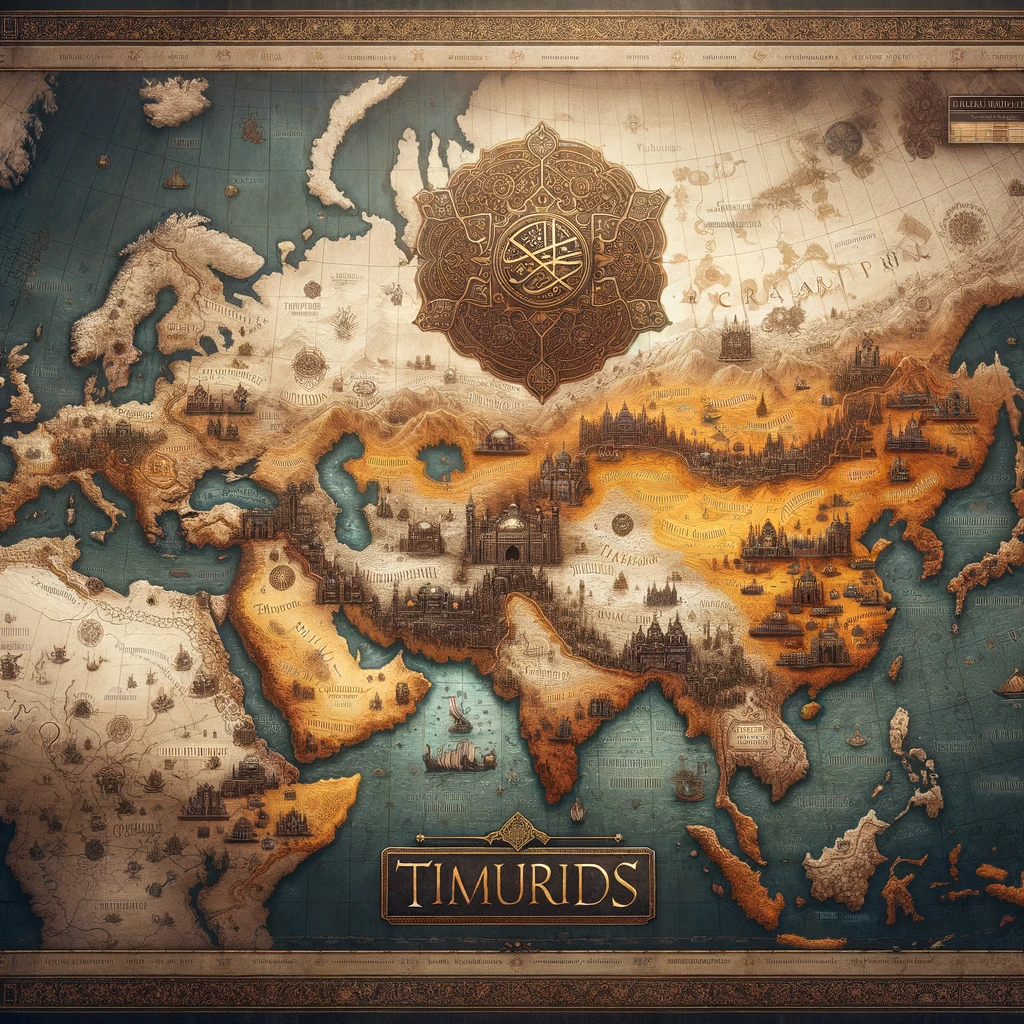
Embark on a journey through the intricate and captivating world of Europa Universalis IV as the Timurids, a nation poised at the crossroads of power and precariousness. Nestled in the heart of Asia, the Timurid Empire offers a unique blend of military might, diplomatic intrigue, and internal complexity that promises both challenges and opportunities for players seeking an immersive historical experience.
In this comprehensive beginner’s guide, we unlock the secrets to not only surviving but thriving as the Timurids.
Join us as we delve into the heart of the Timurid Empire, exploring strategies for early game stability, expansion tactics, and long-term empire-building. Get ready to write your own chapter in history and transform your realm from a fragile empire into a formidable global power.
Table of Contents
1444: The Dawn of the Timurid Empire
Diplomacy
- Securing Your Borders: As the Timurids, you start surrounded by smaller nations and potential rivals. Immediately work on securing alliances with neighboring powers like Ajam or Multan. These alliances will deter aggression from nearby threats.
- Manage Vassal Relations: Your empire begins with several vassals. Prioritize improving relations with these vassals, especially Transoxiana, to prevent them from seeking independence.
- Strategic Alliances: Consider forming alliances with regional powers like the Ottomans or Mamluks. These stronger allies can provide crucial support against major adversaries or in your expansion efforts.
Economy and Military
- Balancing the Budget: Initially, reduce army maintenance to save money, but be ready to increase it swiftly in case of internal revolts or external threats.
- Strengthen Your Forces: The Timurids start with a strong military. Focus on consolidating and maintaining your army, and consider hiring military advisors to enhance your military capabilities.
- Optimize Trade: Your geographical position allows for lucrative trade opportunities. Assign merchants to key trade nodes like Samarkand and Persia to maximize your income.
Technology and Ideas
- Embrace Timurid Tradition: Focus on maintaining stability within your empire. The Timurids’ unique position in the Muslim world offers different challenges and opportunities compared to Confucian or Christian nations.
- Prioritize Military Technology: Given the Timurids’ initial military prowess, prioritizing Military Technology will help maintain your edge over neighbors and rebellious vassals.
- Choosing the Right Ideas: Administrative ideas are a good early choice to help manage your large empire and reduce core-creation costs. Additionally, consider Humanist or Religious ideas to manage the diverse religions within your empire.
Expansion and Internal Management
- Stabilize Internally Before Expanding: Before launching ambitious conquests, ensure internal stability by placating vassals and managing unrest.
- Strategic Expansion: Once stable, look towards strategic expansion. Expanding into India can be lucrative, but be cautious of aggressive expansion and the potential for coalitions.
1444 – 1450: Laying the Foundations of the Timurid Empire
Consolidating Power
- Stabilizing the Realm: In these initial years, focus on stabilizing your empire. Deal with potential rebellions, especially from your larger vassals. Keeping a strong army and improving relations with your vassals are key.
- Centralizing Authority: Begin the process of centralizing your authority. This includes annexing smaller vassals when opportune and strengthening your core provinces.
Economic Management
- Developing Your Economy: Strengthen your economy by building marketplaces in provinces with high trade value. Prioritize economic development in provinces like Samarkand to increase your overall income.
- Balancing Military Expenditure: Keep a close eye on your military expenditure. While maintaining a strong army is crucial, avoid overspending to prevent economic collapse.
Diplomatic Relations
- Maintaining Alliances: Keep your alliances strong, especially with larger neighbors. These early years are crucial for forming a diplomatic foundation that will support your future expansion.
- Watching for Opportunities: Be on the lookout for diplomatic opportunities, such as weakened neighbors or potential new allies.
Military Expansion
- Selective Conquests: Look for opportunities to expand your territory, but be strategic. Focus on regions that complement your existing empire, such as areas in Persia or towards India.
- Handling Aggressive Expansion: Be mindful of aggressive expansion. Expanding too quickly can lead to coalitions against you, which can be devastating in the early game.
Technological Advancements
- Investing in Technology: Keep up with technological advancements, especially in military technology. Falling behind can leave you vulnerable to technologically superior neighbors.
- Idea Groups: Depending on your strategy, choose idea groups that complement your playstyle. Administrative ideas can help with coring costs and governance, while Humanist or Religious ideas can aid in managing the diverse cultures and religions within your empire.
1450 – 1465: Expanding and Solidifying the Timurid Empire
Strategic Expansion and Consolidation
- Targeted Conquests: By now, you should have stabilized your internal situation. It’s time to look outward. Consider expanding into the Indian subcontinent, where rich provinces can significantly boost your economy.
- Consolidating Gains: After each conquest, focus on consolidating these new territories. Core them, convert religions if necessary, and reduce unrest to integrate them smoothly into your empire.
Diplomatic Maneuvers
- Shifting Alliances: As you grow in power, some old alliances might become less relevant, while new potential allies could emerge. Keep a flexible approach to diplomacy.
- Avoiding Coalitions: Be wary of aggressive expansion. If you expand too aggressively, especially into the highly populated regions of India, you risk forming large coalitions against you.
Economic Development
- Trade Expansion: Look to expand your influence in the trade nodes of Persia and beyond. Controlling more nodes directly or through vassals can significantly increase your income.
- Building a Strong Economy: Continue developing your core provinces with buildings that boost tax, production, and manpower. A strong economy is the backbone of a powerful empire.
Military Innovations
- Maintaining Military Supremacy: Keep investing in military technology and ideas. This will ensure that your armies remain a formidable force against both internal and external threats.
- Professionalizing the Army: Consider adopting ideas or policies that enhance your military effectiveness, such as discipline or combat ability enhancements.
Internal Affairs and Stability
- Managing Your Realm: Continue to placate vassals and integrate them when appropriate. Keeping a large and diverse empire stable requires constant attention.
- Religious and Cultural Harmony: With a vast and diverse empire, managing different religions and cultures is vital. Adopting Humanist or Religious ideas can greatly assist in reducing unrest caused by religious and cultural differences.
Long-Term Planning
- Setting the Stage for the Future: Begin laying the groundwork for long-term goals. Whether it’s building a world-spanning empire, dominating trade across continents, or becoming a technological powerhouse, now is the time to plan and set the infrastructure for these ambitions.
- Exploring New Frontiers: Depending on your situation, consider exploring opportunities outside your immediate region, such as making naval explorations into the Indian Ocean or forging new paths into the Middle East or Central Asia.
1465 – 1480: Entrenching the Timurid Power
Solidifying Regional Dominance
- Establishing Hegemony: By now, your empire should be a dominant force in the region. Focus on solidifying this position by forming strong defensive alliances and possibly even vassalizing weaker neighboring states.
- Preventing Rebellion: Keep a watchful eye on internal unrest. Use your spies to counteract any espionage that might fuel rebellions and continue to placate or integrate vassals strategically.
Advanced Economic Management
- Diversifying the Economy: Start diversifying your economy by investing in different types of buildings, like workshops and manufactories, in provinces with valuable trade goods.
- Mastering Trade Dynamics: Further enhance your control over trade by strategically placing merchants and constructing trade buildings. If possible, dominate entire trade nodes to maximize income.
Diplomacy and Global Presence
- Elevating Diplomatic Influence: As your power grows, so should your influence. Start participating in global politics, possibly supporting allies in far-off wars or forging new alliances beyond your immediate neighbors.
- Exploring New Diplomatic Avenues: Keep an eye on emerging global powers and consider diplomatic relationships that could be beneficial in the long run, such as marriage alliances or support in wars.
Military Evolution
- Continued Military Investment: Keep your military technology up-to-date and maintain a strong, well-balanced army. Consider expanding your military infrastructure with more forts in strategic locations.
- Developing a Navy: If you haven’t already, start building a navy. A strong fleet can protect your coasts, expand your trade power, and even allow for overseas expansion.
Cultural and Religious Policies
- Promoting Harmony: Continue to manage the diverse cultures and religions in your empire. Implement policies that promote tolerance and reduce unrest.
- Cultural Shifts: If beneficial, consider cultural shifts to better integrate key areas or to align with long-term strategic goals.
Setting Sights on Future Goals
- Planning for Long-Term Objectives: Start planning and preparing for your long-term goals, whether it’s reaching into Europe, controlling the Indian subcontinent, or aiming for naval dominance.
- Preparing for Advanced Warfare: As the world evolves, so does warfare. Start preparing for more advanced forms of warfare, including potential conflicts with major European powers.
1480 – 1495: The Timurid Ascendancy and Global Ambitions
Cementing Global Influence
- Expanding Foreign Relations: As your empire grows, expand your diplomatic network. Establish relationships with European powers and other major players across the world.
- Exploring Overseas Expansion: If you haven’t already, consider overseas expansion. This could involve colonization or conquests in Africa, the Middle East, or even Southeast Asia.
Advanced Economic Strategies
- Optimizing Trade Empire: Focus on dominating key trade nodes. Establish trade companies in lucrative areas and consider steering trade from far-flung regions to your core provinces.
- Economic Innovations: Adopt new economic policies that reflect your global ambitions. Invest in development, encourage trade efficiency, and build a robust economy that can sustain large armies and fleets.
Military Modernization
- Upgrading the Army: Continuously upgrade your military units and tactics to keep up with the evolving warfare landscape. Embrace new military technologies and ideas to maintain your edge in conflicts.
- Establishing Naval Power: A strong navy becomes increasingly important. If you’ve expanded to coastal regions, invest in a powerful navy to protect your interests and expand your influence overseas.
Cultural and Religious Dynamics
- Promoting Cultural Integration: With a vast empire, promoting cultural integration becomes crucial. Adopt policies that encourage cultural assimilation or coexistence to maintain stability.
- Handling Religious Diversity: Continue to manage religious diversity, either through tolerance policies or active conversion, depending on your strategic goals and national ideas.
Preparing for the Age of Reformation
- Anticipating Religious Changes: The upcoming Age of Reformation can bring significant religious upheavals. Prepare your empire to either embrace or resist these changes, depending on your strategy.
- Strengthening Internal Structures: Strengthen your internal administrative structures to handle the challenges of the new age. This includes improving governance, reducing corruption, and ensuring a stable succession.
Long-Term Empire Building
- Envisioning the Future: Look towards the future and begin laying the groundwork for your empire’s long-term goals. Whether it’s aiming for global trade dominance, establishing a colonial empire, or becoming the world’s foremost military power, start setting the necessary steps in motion.
- Innovating for the Future: Invest in technological advancements and ideas that will set you up for success in the coming centuries. Prioritize innovations that align with your long-term objectives and adapt to the changing global landscape.
1495 – 1510: The Golden Age of the Timurid Empire
Mastering Global Diplomacy
- Influencing World Politics: Your empire should now be a key player in world affairs. Actively participate in global politics, influencing alliances, and major conflicts to serve your interests.
- Forming Strategic Partnerships: Seek out strategic partnerships with other major powers. These alliances can be crucial for your future ambitions, whether they are military conquests, trade dominance, or colonial expansion.
Economic and Trade Dominance
- Maximizing Trade Profits: Focus on dominating as many lucrative trade nodes as possible. Utilize your merchants and fleet to steer wealth back to your empire and invest in trade-related buildings and ideas.
- Building a Diverse Economy: Continue to diversify your economy. Develop provinces with high-value trade goods and invest in buildings that boost production and tax revenues.
Military Expansion and Modernization
- Expanding Military Horizons: Depending on your position, you might be looking to expand further into Europe, Africa, or Asia. Keep your military updated with the latest technology and maintain a large, well-trained army.
- Naval Expansion: If you have coastal access, continue building your naval strength. A strong navy is essential for protecting trade routes, engaging in colonial activities, and exerting power on a global scale.
Cultural and Religious Management
- Promoting Stability: Continue to focus on policies that promote stability within your diverse empire. Balance religious tolerance with conversion efforts to maintain internal harmony.
- Cultural Policies: Develop cultural policies that integrate various ethnic groups into your empire. This can include promoting specific cultures or maintaining a multicultural approach to governance.
Adapting to the Age of Reformation
- Navigating Religious Changes: As the Age of Reformation unfolds, be prepared to adapt. Depending on your situation, this might mean defending against religious wars, taking advantage of new opportunities, or staying neutral.
- Strengthening Ideological Identity: Solidify your empire’s ideological identity, whether it’s through embracing the Reformation or strengthening your traditional beliefs, to guide your future actions.
Preparing for the Future
- Long-Term Strategic Planning: Look towards the next century. Start planning for changes in global trade patterns, potential colonial ventures, or major wars that could reshape the world.
- Investing in the Future: Continue investing in key areas such as technology, infrastructure, and military capabilities to ensure your empire remains a dominant force in the coming years.
Key Tips and Considerations for the Timurid Empire
* The Timurids must balance a vast and diverse empire. To ensure stability, focus on managing vassal relations and religious diversity. Utilize policies or military actions judiciously to prevent rebellions and maintain control over your territories.
* Leverage your geographical position to become a central player in Eurasian trade. Prioritize control and development of key trade nodes such as Samarkand, Persia, and even the Indian trade nodes if you expand there. Build trade buildings, deploy merchants strategically, and invest in provinces with valuable resources to enhance your trade income.
* As the Timurids, expansion should be both cautious and opportunistic. Focus on integrating culturally and religiously similar regions to reduce unrest. Be mindful of aggressive expansion penalties and balance conquests with diplomatic efforts. Forge alliances, especially with powerful neighbors, and consider vassalizing strategically important smaller states to bolster your position.
What are The Best Idea Groups for Timurids in EU4?
Choosing the right idea groups in Europa Universalis IV can significantly impact your gameplay, especially for a complex and multifaceted empire like the Timurids. Here are the best idea groups to consider for controlling your homeland and for military prowess:
For Controlling Your Territories and Rebels:
- Administrative Ideas: This group is essential for managing a large empire like the Timurids. It reduces core-creation costs (very useful for expansion), increases available mercenaries, and reduces administrative technology costs. The reduced core-creation cost is particularly valuable given the Timurids’ position for expansion into diverse and high-development territories.
- Humanist Ideas: These ideas are crucial for maintaining internal stability, especially in an empire as culturally and religiously diverse as the Timurids. Humanist ideas reduce religious unity problems, increase tolerance, and reduce separatism, which significantly lowers the risk of rebellions across your empire.
- Trade Ideas: The Timurids, due to their geographical location, can control key trade nodes in Central Asia and potentially in India. Trade ideas will increase your income significantly by boosting your trade efficiency and steering capabilities. More money from trade means more resources for military and internal development.
For Military Focused Timurids:
- Quality Ideas: This idea group enhances the quality of your army and navy, providing bonuses to infantry, cavalry, and artillery combat ability. It also boosts your naval capabilities, which can be beneficial if you’re expanding towards the coasts and oceans.
- Offensive Ideas: Offensive ideas are excellent for enhancing your military capabilities. They offer bonuses like faster siege ability, more leaders without upkeep, and increased discipline. These are particularly useful for the Timurids, who often face multiple fronts of conflict.
- Defensive Ideas: While the Timurids start with a strong military, defensive ideas can fortify that strength, especially in the early to mid-game. The morale boost and reduced maintenance during peacetime are particularly useful. Also, the increased fort defense and reduced attrition for enemies can be a game-changer in wars, especially when defending in your own territory.
How Do I Prevent the Timurid Vassals from Declaring Independence?
Managing vassals is a critical aspect of playing as the Timurids. To prevent them from declaring independence, focus on improving relations with them. Use your diplomats to increase their opinion of you, give them subsidies or gifts, and avoid actions that might increase their liberty desire, such as overextending your own empire. Additionally, strengthening your military is key to deterring vassals from seeking independence.
What Should Be My Initial Strategy as the Timurids in EU4?
The initial strategy for the Timurids should revolve around stabilizing your internal situation. Start by improving relations with your vassals to prevent them from rebelling. At the same time, balance your budget by reducing army maintenance during peacetime, but be ready to ramp it up quickly in case of internal or external threats. Focus on building a strong economic base and consider early expansion into neighboring weaker states, keeping an eye on aggressive expansion penalties.
Which Ideas Should I Prioritize as the Timurids?
For the Timurids, prioritizing the right ideas is essential. Initially, focus on Administrative ideas to reduce core-creation costs and manage a large empire more effectively. Humanist or Religious ideas are also crucial for dealing with the religious diversity within your empire and avoiding unrest. For military strength, Quality and Offensive ideas are excellent to boost your army’s combat abilities, while Defensive ideas can help in maintaining strong borders against potential invaders.
Conclusion
This Timurids Guide is written for the vanilla version of EUIV – if you want to add up the fun of playing Europa Universalis IV, consider adding DLCs and content packs to your game.
As we bring our comprehensive guide for the Timurids in Europa Universalis IV to a close, it’s clear that mastering this majestic empire demands a nuanced mix of shrewd diplomacy, economic acumen, and tactical military expansion. Whether it’s consolidating power across the vast lands of Asia or navigating the complex dynamics of internal and external politics, playing as the Timurids offers a deeply engaging and richly rewarding experience.
We hope this guide illuminates your path to glory and ignites your passion for the intricate and fascinating world of Europa Universalis IV. Now, it’s your turn to take the helm: What ingenious strategies or memorable experiences have you encountered in your Timurid campaigns? We invite you to share your stories and insights in the comments below. Let’s join forces in this grand EU4 adventure and continue to write our own extraordinary chapters in the annals of history!
Leave a Reply